How Much Does an Asphalt Driveway Cost in Massachusetts? (2026 Guide)
· By Gaughan Land & Property Services
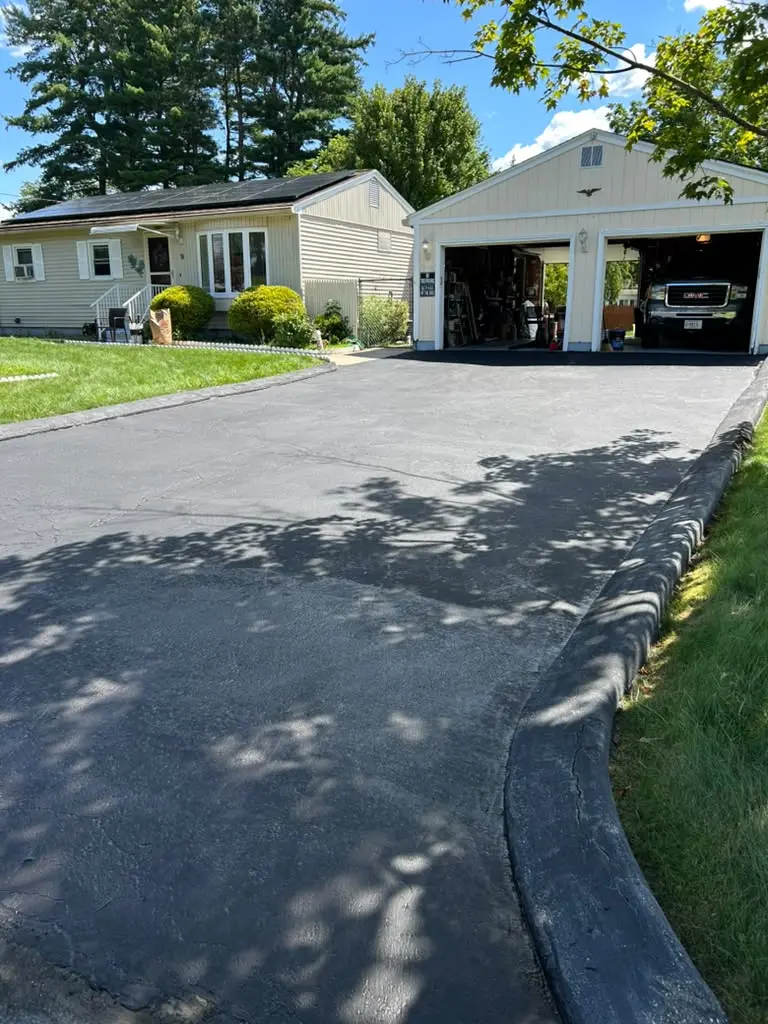
If you are planning a new driveway or replacing a cracked, tired one, the first question is almost always the same: what will it cost? Asphalt is the most popular driveway material in Massachusetts for good reason. It handles our freeze-thaw winters well, goes down quickly, and costs less than concrete or pavers. But the price you actually pay depends on your driveway size, the shape of the ground underneath, and how much prep the job needs.
This guide walks through realistic 2026 price ranges for asphalt driveways in Western Massachusetts, the factors that push the number higher or lower, and the questions to ask before you sign anything. Every property is different, so treat these as ballpark figures. The only way to know your real cost is a free on-site estimate where someone measures the space and checks the base.
The Short Answer: Typical Asphalt Driveway Price Ranges
For most residential jobs in Massachusetts, asphalt driveways typically run somewhere between $5 and $10 per square foot installed. That range covers standard prep, a proper base, and a fresh asphalt surface. Larger or more complex projects can land outside that range in either direction.
As a rough guide, a small single-car driveway (around 400 to 600 square feet) often falls in the $3,000 to $6,000 range. A standard two-car driveway (roughly 600 to 900 square feet) is commonly $5,000 to $9,000. Long or wide driveways, or ones that need heavy excavation and a rebuilt base, can climb well past $10,000. These are typical market ranges, not fixed prices, and the number moves with material costs, access, and site conditions.
What Actually Drives the Price
Square footage is the biggest single factor, but it is far from the only one. The condition of the ground underneath matters a lot. A driveway going over solid, well-draining soil costs less than one where the base has to be dug out, regraded, and rebuilt with fresh gravel.
Other things that move the number: thickness of the asphalt (thicker holds up better under trucks and plows), the amount of excavation and old material removal, drainage work, tricky access for equipment, slope, and edge work along lawns or walkways. A steep or oddly shaped driveway simply takes more labor and material than a flat rectangle.
New Install vs. Repave vs. Resurface
These three are often confused, and they carry very different price tags. A brand new install (fresh base plus asphalt) is the most involved and the most expensive because it includes excavation and building the foundation from scratch.
Resurfacing, sometimes called an overlay, lays a new layer of asphalt over an existing surface that is still structurally sound. It typically costs less because the base stays in place. It is a good option when the underlying driveway is solid but the top has worn, faded, or developed minor cracks. Full removal and repaving is the right call when the base has failed, when there is heavy alligator cracking, or when the driveway holds water and sinks. Resurfacing over a bad base only buys a year or two before the same problems come back.
Why Massachusetts Weather Affects Your Cost
Freeze-thaw cycles are the enemy of any paved surface in New England. Water seeps into small cracks, freezes, expands, and pries the surface apart a little more each winter. Add road salt, snow plow blades, and heavy spring runoff, and a poorly built driveway ages fast.
This is why the base and drainage matter so much here. A driveway built with a proper compacted gravel base and good pitch for water runoff costs a bit more up front but lasts far longer. Cutting corners on the base is the most common reason Western Massachusetts driveways fail early. When you compare quotes, make sure everyone is pricing the same base depth and prep, not just the visible asphalt.
The Role of Prep and Base Work
The part of the job you never see is often the part that determines how long the driveway lasts. Good prep usually includes clearing the area, excavating to the right depth, laying and compacting a gravel base, and grading for drainage before any asphalt is placed.
When a quote looks unusually cheap, the savings almost always come from skipping or thinning the base work. That can look fine for the first season and then crack, sink, or pool water once winter hits. It is worth asking any contractor exactly how deep they excavate, what base material they use, and how they handle drainage. A clear answer is a good sign.
Sealcoating and Long-Term Maintenance
Sealcoating is a protective layer applied on top of cured asphalt to shield it from water, sun, and salt. It does not repair damage, but it slows the wear that leads to cracks. Most sealcoating jobs are priced separately from paving and typically run a few hundred dollars for an average residential driveway, depending on size.
A common maintenance rhythm is to let new asphalt cure for the first several months, then sealcoat and repeat every few years after that. Filling cracks promptly and keeping water flowing off the surface both extend the life of the driveway. Regular upkeep is far cheaper than an early repave, so factor a small ongoing maintenance budget into your plans.
Concrete vs. Asphalt: A Quick Cost Comparison
Homeowners often weigh asphalt against concrete. Asphalt usually costs less up front, installs faster, and is easier to repair. It also flexes slightly with temperature swings, which helps in our climate. The trade-off is that it needs periodic sealcoating and generally has a shorter lifespan than concrete.
Concrete costs more initially and takes longer to cure, but it can last longer with less frequent maintenance and offers more finish options. For most driveways in Ludlow, Springfield, Chicopee, and the surrounding Hampden County towns, asphalt remains the value choice. If you are torn between the two, an estimate that prices both against your specific site removes the guesswork.
How to Get an Accurate Quote
Online calculators and per-square-foot averages are useful for setting expectations, but they cannot see your driveway. A trustworthy estimate comes from someone standing on your property, measuring the area, checking the existing base, looking at drainage, and confirming equipment access.
Get more than one quote, and make sure each is spelled out in writing: square footage, asphalt thickness, base depth, prep and removal, drainage, and cleanup. When the line items match, you can compare fairly instead of chasing the lowest sticker price. Gaughan Land & Property Services provides free, no-pressure estimates for asphalt driveways across Ludlow and the surrounding Western Massachusetts area. Call (413) 519-8514 to set up a visit and get a real number for your property.
Frequently asked questions
- How much does a typical asphalt driveway cost in Massachusetts?
- Most residential asphalt driveways in Massachusetts run roughly $5 to $10 per square foot installed. A standard two-car driveway commonly lands between $5,000 and $9,000, though size, base condition, and prep needs move the number. The only way to know your exact cost is a free on-site estimate.
- Is asphalt cheaper than concrete for a driveway?
- Yes, in most cases asphalt costs less up front than concrete, installs faster, and is easier to repair. Concrete usually lasts longer with less maintenance but carries a higher initial price. For most Western Massachusetts driveways, asphalt is the value choice.
- How long does an asphalt driveway last in New England?
- A well-built asphalt driveway with a proper base and regular maintenance can last many years, typically in the range of 15 to 20 years or more. Freeze-thaw winters, plowing, and salt shorten that life, so good drainage and periodic sealcoating make a real difference.
- Do I need to sealcoat a new asphalt driveway?
- Sealcoating is not required, but it protects the surface from water, salt, and sun and helps slow cracking. Most homeowners wait several months for new asphalt to cure, then sealcoat and repeat every few years. It typically costs a few hundred dollars and extends the life of the driveway.
- Should I resurface or fully replace my driveway?
- If the base is still solid and only the top layer is worn, resurfacing (an overlay) is usually cheaper and works well. If the driveway has heavy cracking, sinks, or holds water, the base has likely failed and full replacement is the better long-term value. An on-site inspection tells you which one fits.
Related services
Serving
Found this helpful? Make us a preferred source on Google.
Ready for an exact price?
Get a free, no-pressure in-home estimate. Real numbers for your home, not a phone guess.